
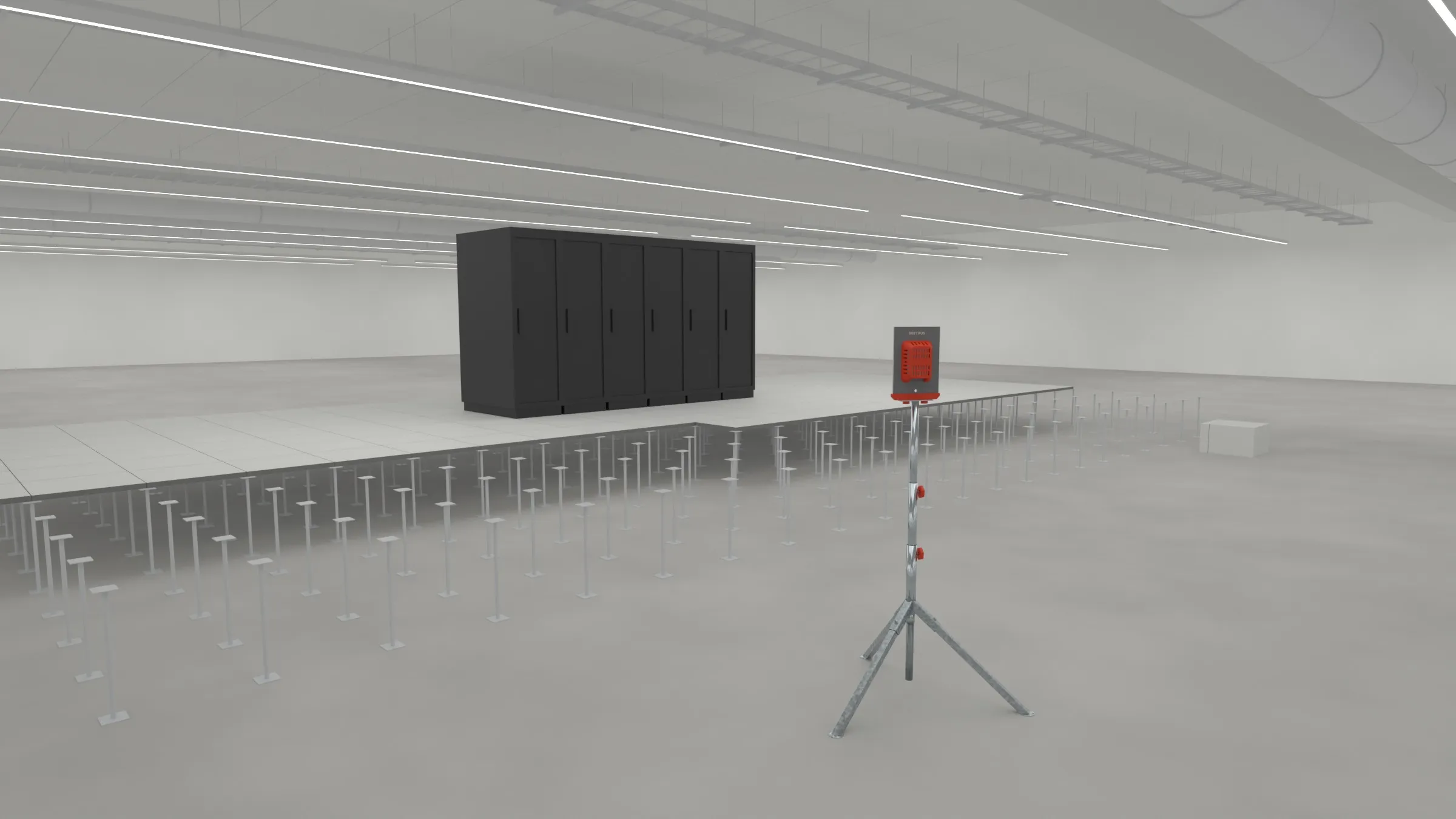
DOES THE DUST STAY INSIDE THE COMPARTMENT?
DATA CENTRES
Dust under control from building a data centre to taking it into use
A data hall should be clean when it is taken into use, and its cleanliness is decided already during construction. Loopshore’s measuring devices measure dust in the work areas and outside the compartments throughout construction and show where and when dust is created. After the final cleaning and the start of the ventilation, the continuous curve shows when the particle count has stayed low long enough.
Don’t guess, measure.
Why dust is a risk for a data hall
In most data halls, the equipment is cooled wholly or partly with air that flows through it. During construction, dust settles in the ventilation system and on surfaces, and when the cooling starts, the air carries it into the equipment.
That is why the client can require the construction cleanliness class P1: dust must not spread from the work area into clean spaces or the ventilation system. We supply measuring devices and the monitoring service for P1 sites: you see all the time whether the dust stays inside the compartment. The Finnish dust measurement guideline Pölymittausohje 2025 describes how dust is measured continuously in a construction project. The measurement interval is no more than five minutes, the main quantity is PM4, and its eight-hour average is used to assess exposure.
Pölymittausohje 2025
Loopshore took part in writing the guideline, and according to the guideline, Loopshore’s system meets the requirements it sets.
Two phases in the same building
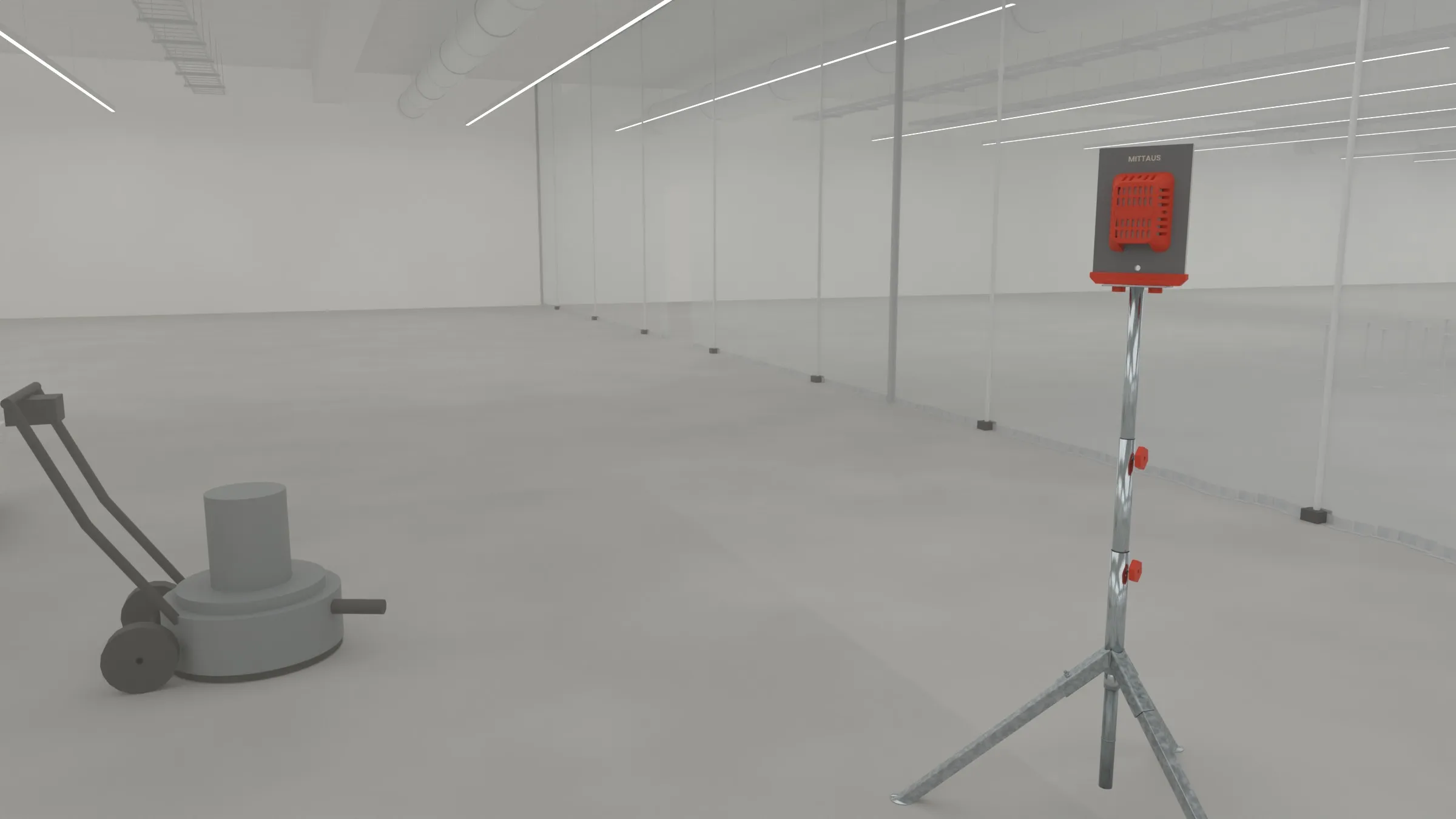
When some of the data halls are finished, the same building has two phases at once. Some of the measuring devices stay in the dusty work areas and outside the compartments, and some are moved to the finished halls.

Construction
In dusty work, dust is kept inside the compartment with negative pressure and air purifiers. The measuring devices show whether the dust stays inside the compartment, and pressure difference measurement with Loop Delta shows all the time whether the compartment stays under negative pressure.

Final cleaning and taking into use
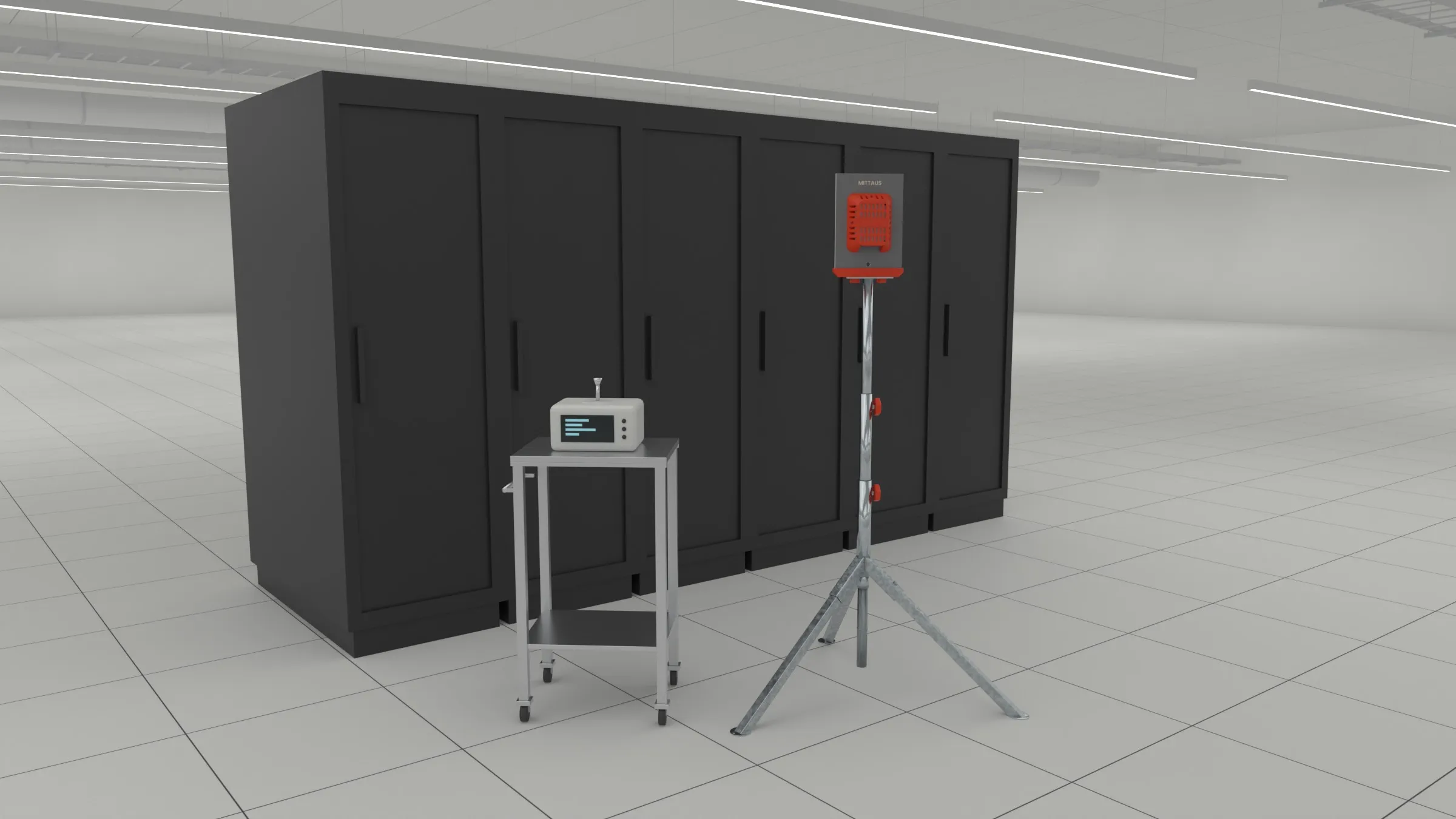
For finished data halls, the ASHRAE data centre guideline recommends class 8 of the ISO 14644-1 standard. The official classification measurement is always done with a particle counter according to the standard, and the measuring devices complement it with continuous monitoring: they show whether clear rises appear between the classification measurements, for example on installation and delivery days, and whether the level returns after them.
Our devices are in use on a Finnish data centre construction site, where they first follow the phase of dusty work and later the halls as they are finished. We supply measuring devices and the monitoring service for both phases.
Accurate measurement and continuous monitoring together
A portable particle counter measures accurately, but one measurement tells one moment. Loop One is there all the time, but its accuracy is lower. Together they give the benefits of both.
What you get

Dust shows in every work phase
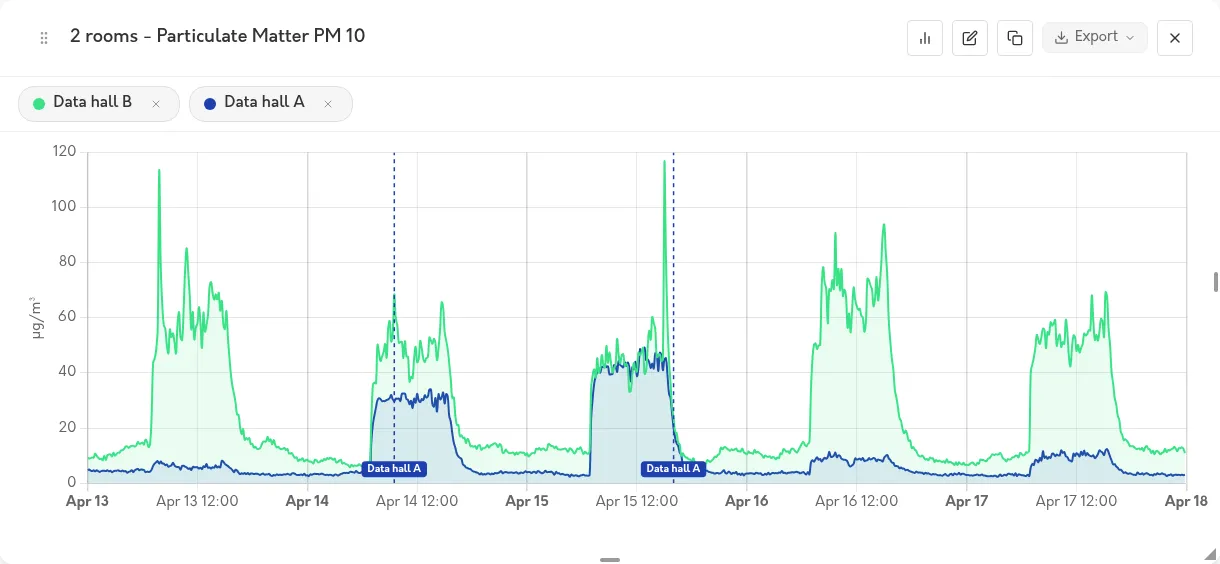
The measuring devices measure the fine particles PM1, PM2.5, PM4 and PM10 and the particle count by size class, so dusty work phases and rises show clearly.

An alarm when a limit is exceeded
When a limit is exceeded for longer than the time you set, the service sends an alarm by email and text message. The limits are set from the site’s baseline.

The same view for every party
The client, the supervisor and the contractor get their own logins to the same site. The locations of the measuring devices are marked on a floor plan, and the readings show on it.

Work phases and reports
Work phases, observations and corrective actions are recorded together with the measurements. A PDF report and a CSV export for a chosen period are available in the browser.

No connection to the site’s network
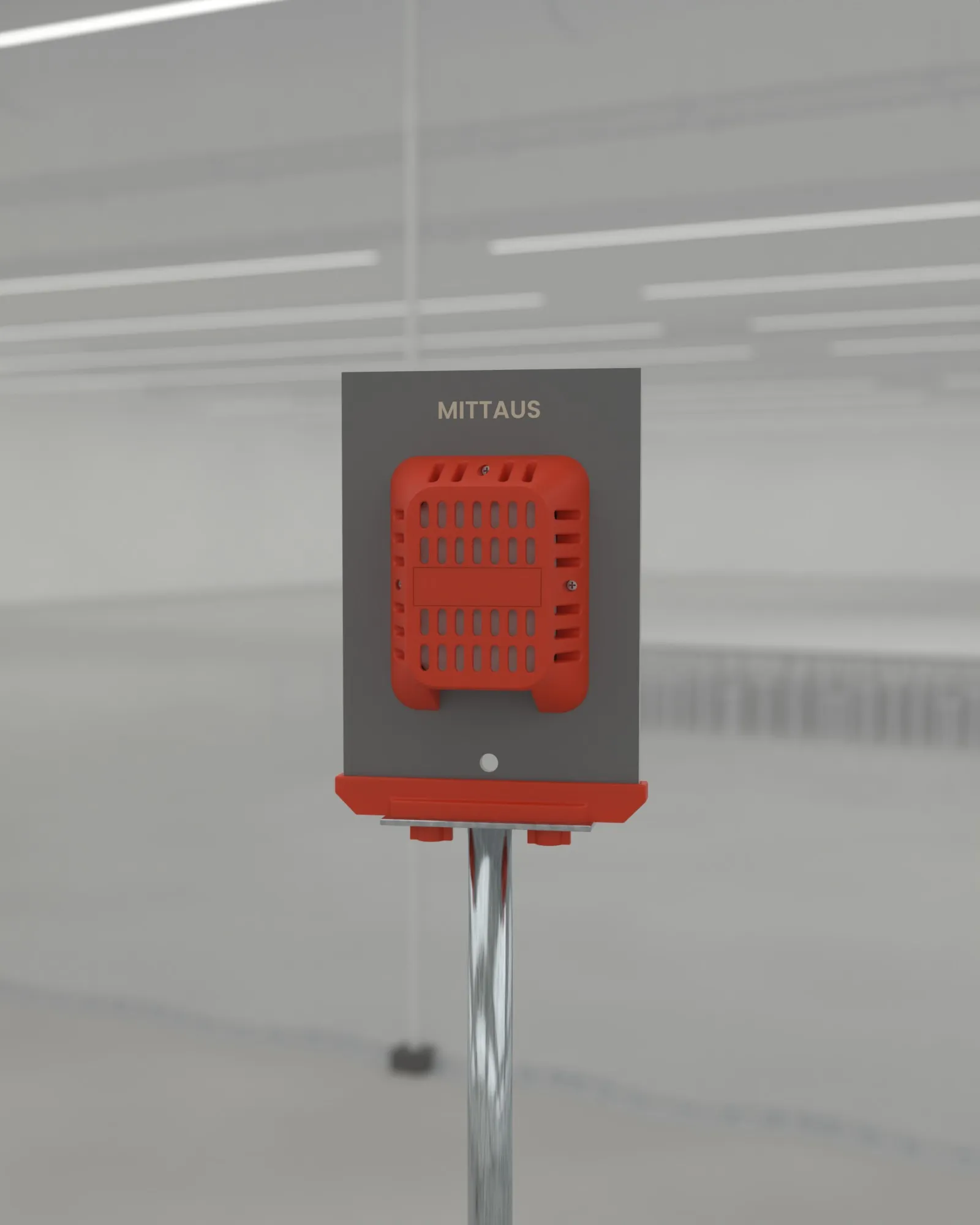
The device uses its own encrypted 4G connection, so it is not connected to the network of the site or the data centre. On a stand, it can be moved from place to place without fixings to the structures.

The data is kept until the hall is in use
The measurement data is kept after the project unless agreed otherwise. The site can be taken into use again later with its old data, for example when filters are changed.
How it works
Placement
The measuring devices are placed in the dusty work areas and outside the compartments at a height of about 1–2 metres. The starting point for dimensioning in the dust measurement guideline is one device per 150 square metres of work or affected area.
Baseline and limits
The baseline is measured with a portable particle counter next to the measuring devices. The comparison measurement can be done by our partner, and it is offered separately. The site’s limits are set from the baseline, and the devices are adjusted remotely to match the comparison measurement.
Monitoring during the work
The guideline’s five-minute measurement interval runs on mains power. The comparison is repeated when the work phase changes, and when a block is finished, the devices are moved to the next one.
Timing the classification measurement
The official classification measurement is done with a particle counter according to the standard. The continuous curve helps time it for a moment when the curve shows no rises.
What the measuring device does not tell
In a clean data hall there are so few particles that the measuring device’s accuracy is not enough to tell whether the space is below the ISO 8 limit. The device shows clear rises and the level falling.
The handover cleanliness of class P1 is assessed from dust settled on surfaces and in the ventilation system. The measuring device measures particles in the air during the work and shows how the dust control works.

Ask about measuring in data centres
Tell us about your project, and we will agree how the measuring devices and the monitoring service fit your site.
We do not share your information with third parties.
Read more about our privacy practices.